7 Science-Backed Health Benefits of Infrared Sauna Therapy
What the peer-reviewed research actually shows — with honest context about evidence strength. Covering cardiovascular health, chronic pain, muscle recovery, mental health, inflammation, circulation, and stress regulation.
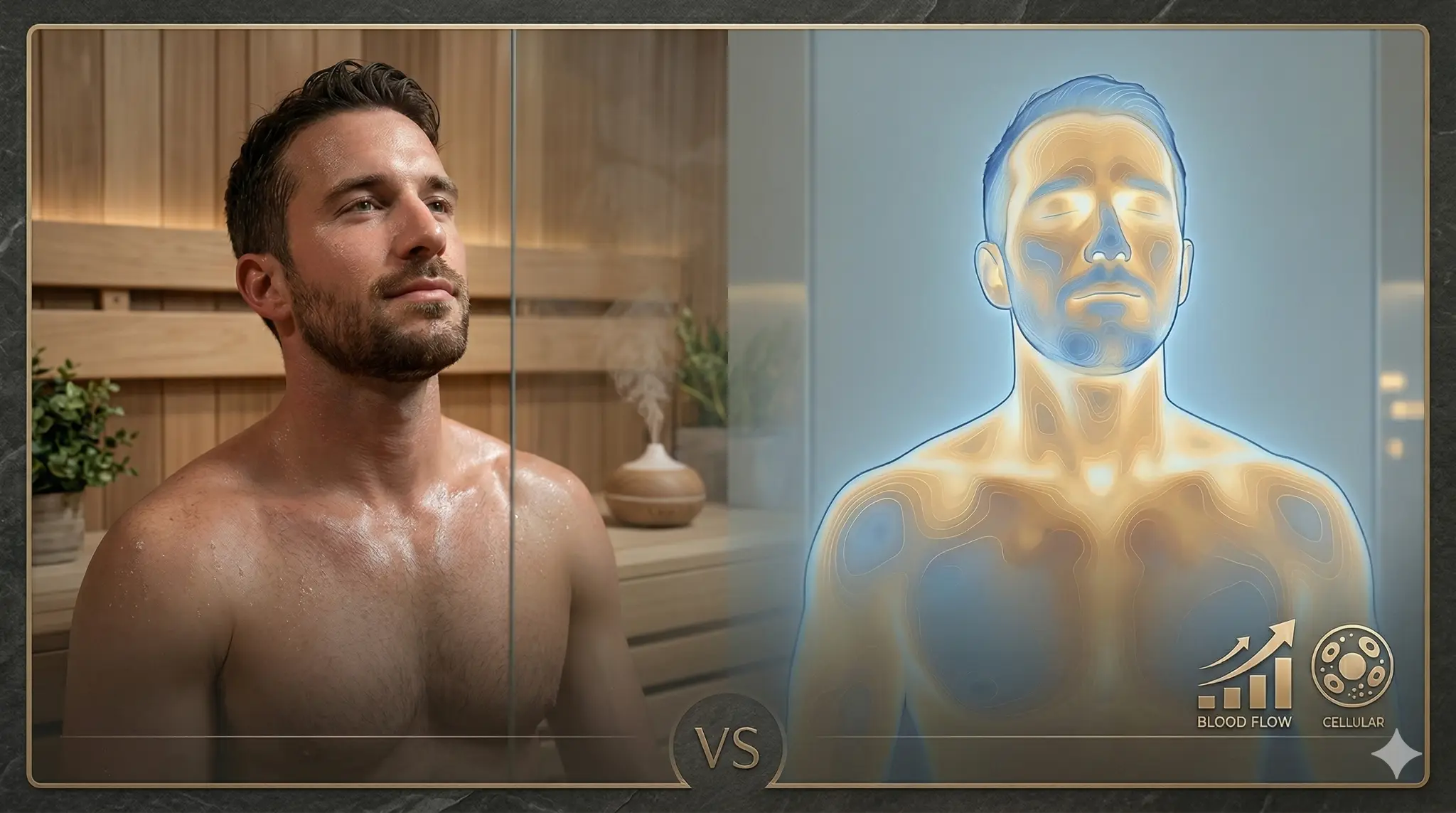
What the peer-reviewed research actually shows — with honest context about evidence strength and what remains to be studied.
---
**Jump to a benefit:**
1. Cardiovascular support and blood pressure reduction
2. Chronic pain relief and reduced joint stiffness
3. Muscle recovery and athletic performance
4. Mental health and depression symptom reduction
5. Reduced inflammation and oxidative stress
6. Improved circulation and vascular function
7. Stress reduction and autonomic nervous system regulation
---
Infrared sauna therapy has moved well beyond the wellness-trend category. A growing body of peer-reviewed clinical research — published in journals including *JAMA Psychiatry*, *Clinical Rheumatology*, and *Biology of Sport* — points to measurable physiological benefits across multiple systems. Here is what the science currently supports, and where the evidence still has room to grow.
It is worth stating upfront: much of the strongest long-term sauna data comes from traditional Finnish sauna research, not infrared-specific studies. However, a substantial and growing clinical literature focuses specifically on far-infrared (FIR) therapy, and infrared devices were used in several of the most rigorous psychiatric and cardiovascular trials to date. The distinction is noted where relevant throughout this article.
---
## 1. Cardiovascular support and blood pressure reduction
*Strongest evidence base — multiple RCTs and large cohort studies*
Of all the health benefits associated with sauna use, cardiovascular effects have the most robust evidence. Multiple randomized controlled trials and large prospective cohort studies — including the landmark Kuopio Ischaemic Heart Disease Risk Factor Study following over 2,000 Finnish men for up to 20 years — have documented meaningful associations between regular sauna use and reduced cardiovascular mortality, lower blood pressure, and improved cardiac function.
> **Key research:** A 2022 multi-arm RCT published in the *American Journal of Physiology* found that combining regular sauna sessions with exercise produced superior improvements in cardiovascular function compared to exercise alone — including greater reductions in arterial stiffness and resting heart rate. A separate 2021 study in *Complementary Therapies in Medicine* found that infrared sauna sessions produced cardiovascular responses comparable to moderate-intensity exercise in healthy women, including heart rate elevations of 60–70% of maximum and significant increases in cardiac output.
The mechanisms are well understood: heat exposure causes peripheral vasodilation, reduces systemic vascular resistance, increases heart rate and cardiac output, and — with repeated exposure — appears to produce adaptations in vascular tone and blood pressure regulation similar to those seen with aerobic exercise training.
> *Caveat: The strongest cohort data comes from traditional Finnish sauna studies. Infrared-specific cardiovascular trials are smaller and shorter in duration. The physiological mechanisms overlap substantially, but direct equivalence has not been established.*
---
## 2. Chronic pain relief and reduced joint stiffness
*Consistent evidence in rheumatoid arthritis and fibromyalgia*
Far-infrared sauna therapy has been studied specifically in populations with chronic pain conditions — including rheumatoid arthritis, ankylosing spondylitis, and fibromyalgia — with consistently positive results across multiple clinical trials.
> **Key research:** A 2009 study in *Clinical Rheumatology* by Oosterveld et al. found that infrared sauna sessions produced statistically significant reductions in pain and stiffness in patients with rheumatoid arthritis and ankylosing spondylitis, with no adverse effects. A 2011 study in *Complementary Therapies in Clinical Practice* found that a combined protocol of infrared sauna and underwater exercise significantly reduced pain, fatigue, and depression scores in fibromyalgia patients compared to exercise alone. A 2022 systematic review in the *International Journal of Environmental Research and Public Health* confirmed that infrared radiation therapy produces meaningful pain relief across multiple musculoskeletal conditions.
The proposed mechanisms include: deep tissue heat penetration increasing local circulation and reducing muscle spasm, heat-induced endorphin release, and anti-inflammatory effects on joint tissue. Unlike superficial heat (heating pads), far-infrared penetrates 2–3 cm below the skin surface, reaching muscle and joint tissue directly.
> *Caveat: Most pain studies are small (20–50 participants) and of short duration (4–8 weeks). Longer-term studies with larger samples are needed to establish durability of effects.*
---
## 3. Muscle recovery and athletic performance
*Emerging evidence with high-quality recent trials*
Post-exercise infrared sauna use is gaining traction in sports science, with recent well-designed trials showing measurable benefits for recovery and potentially for muscle adaptation.
> **Key research:** A 2023 study in *Biology of Sport* (Ahokas et al.) — a randomized crossover trial — found that a single post-exercise infrared sauna session significantly improved recovery of neuromuscular performance and reduced muscle soreness 24 and 48 hours after resistance training. A 2025 follow-up study by the same group in *Frontiers in Sports and Active Living* found that repeated post-exercise infrared sauna use over a training block produced greater muscle hypertrophy compared to training without sauna, alongside sustained recovery benefits.
The mechanisms proposed include: enhanced blood flow to recovering muscle tissue, accelerated clearance of metabolic waste products, heat shock protein upregulation (which supports muscle protein synthesis), and reduced inflammatory signaling in damaged muscle fibers.
> *Caveat: Athletic recovery research is a newer area for infrared sauna specifically. Sample sizes remain small and most studies focus on resistance training. Translation to endurance sports and elite athletic populations requires further study.*
---
## 4. Mental health and depression symptom reduction
*Strongest psychiatric evidence of any wellness intervention — published in JAMA*
The mental health evidence for infrared and whole-body hyperthermia is among the most compelling in the sauna literature — and it comes from rigorous sources.
> **Key research:** A 2016 randomized clinical trial published in *JAMA Psychiatry* (Janssen et al.) found that a single whole-body hyperthermia session — using an infrared device to raise core body temperature — produced a significant antidepressant effect that persisted for six weeks, with a large effect size (Cohen's d = 0.89). This is comparable to the effect sizes of antidepressant medications. A 2024 study from UCSF's Osher Center for Integrative Health (Mason et al.) confirmed these findings in a larger trial, finding that heat therapy produced rapid and sustained reductions in depression symptoms with a strong safety profile.
The proposed mechanisms include: heat-induced release of dynorphins (which paradoxically upregulate mu-opioid receptors, improving mood), serotonin pathway activation via thermosensitive raphe neurons, and normalization of the hypothalamic-pituitary-adrenal (HPA) axis — which is dysregulated in depression.
> *Caveat: The strongest psychiatric trials used whole-body hyperthermia devices, not standard home infrared saunas. Whether conventional infrared sauna sessions produce equivalent core temperature elevations — and equivalent antidepressant effects — requires direct comparative study.*
---
## 5. Reduced inflammation and oxidative stress
*Biological mechanisms with clinical correlates*
Chronic low-grade inflammation underlies a wide range of modern health conditions — from cardiovascular disease and metabolic dysfunction to neurodegenerative disorders. Infrared heat therapy influences inflammatory pathways through several measurable biological mechanisms.
> **Key research:** A study published in *Arteriosclerosis, Thrombosis, and Vascular Biology* found that far-infrared therapy exerts a significant anti-inflammatory effect by inhibiting vascular endothelial inflammation through induction of heme oxygenase-1 — a key cytoprotective enzyme that suppresses inflammatory cytokines. This mechanism is particularly relevant to cardiovascular health, as vascular inflammation is a primary driver of atherosclerosis.
A comprehensive [2024 review in *Temperature* (Taylor & Francis)](https://pmc.ncbi.nlm.nih.gov/articles/PMC10989710/) summarized the proposed anti-inflammatory mechanisms of passive heat therapies including infrared saunas: heat stress activates heat shock proteins (HSPs), which help stabilize cellular proteins and modulate inflammatory signaling. Regular exposure appears to reduce circulating markers of inflammation and oxidative stress — including C-reactive protein, TNF-α, and prostaglandins — while promoting the anti-inflammatory cytokine IL-10.
The Cleveland Clinic also notes that regular sauna use reduces oxidative stress, which is implicated in cardiovascular disease, cancer risk, and neurodegenerative conditions including dementia.
> *Caveat: Much of the mechanistic evidence comes from laboratory studies and smaller clinical trials. Demonstrating that infrared sauna use produces meaningful, long-term reductions in systemic inflammation in healthy populations requires larger prospective studies.*
---
## 6. Improved circulation and vascular function
*Arterial stiffness, nitric oxide, and endothelial health*
Heat exposure causes rapid and sustained vasodilation — the widening of blood vessels. This is not simply a comfort response; it has measurable downstream effects on arterial stiffness, blood pressure, and endothelial function, all of which are established markers of cardiovascular health.
> **Key research:** The *Canadian Family Physician* review of far-infrared sauna evidence found preliminary but high-quality support for FIRS therapy in reducing systolic hypertension and improving hemodynamics in patients with congestive heart failure. A separate study in hemodialysis patients found that far-infrared therapy significantly improved vascular access blood flow and arterial stiffness markers. A [2025 review in *Frontiers in Cardiovascular Medicine*](https://www.frontiersin.org/journals/cardiovascular-medicine/articles/10.3389/fcvm.2025.1537194/full) outlined the mechanisms by which infrared and other heat therapies improve peripheral arterial health: repeated thermal stress appears to induce vascular adaptation, improving endothelium-dependent vasodilation and reducing arterial stiffness — adaptations similar to those observed with aerobic exercise training.
For populations who struggle with exercise — including older adults, people with heart failure, obesity, or chronic fatigue — this overlap with exercise physiology is clinically meaningful. Infrared sauna may represent a viable strategy for maintaining vascular health in people who cannot access conventional cardiovascular conditioning.
> *Caveat: The majority of vascular health studies are of short duration (weeks to months) and involve patients with existing conditions. Long-term vascular benefits in healthy populations have not been as thoroughly studied for infrared saunas specifically.*
---
## 7. Stress reduction and autonomic nervous system regulation
*Cortisol, heart rate variability, and parasympathetic activity*
Stress regulation is one of the most commonly reported benefits of sauna use, and it is one where subjective and objective measures increasingly align. Heat exposure activates a broad relaxation response — reducing cortisol, improving heart rate variability (HRV), and shifting the autonomic nervous system toward parasympathetic (rest-and-digest) dominance.
> **Key research:** A randomized controlled trial of 28 mildly depressed patients found that four weeks of daily far-infrared sauna sessions (60°C, 15 minutes) produced significant improvements in somatic complaints, hunger scores, and relaxation scores compared to bed rest — with meaningful changes in ghrelin concentrations suggesting systemic hormonal effects extending beyond simple relaxation. The [2018 clinical effects review in *Evidence-Based Complementary and Alternative Medicine*](https://pmc.ncbi.nlm.nih.gov/articles/PMC5941775/) notes that patients with chronic fatigue syndrome showed decreased fatigue (p=0.002) and improved anxiety scores (p=0.008) after infrared sauna sessions.
**Mechanisms of stress regulation:**
- **Cortisol reduction** — Heat exposure has been shown to lower circulating cortisol levels after sessions, supporting recovery from chronic stress.
- **Endorphin and serotonin release** — Thermal stress stimulates the release of endorphins and promotes serotonin activity, contributing to improved mood.
- **HRV improvement** — Post-sauna parasympathetic rebound improves heart rate variability — a marker of resilience and recovery capacity.
- **Heat shock protein activation** — HSPs triggered by heat stress protect neurons and appear to support neuroendocrine regulation under chronic stress conditions.
> *Caveat: Much of the stress-response data comes from subjective self-report measures. Larger, well-controlled studies with objective HRV and cortisol measurements are needed to better quantify the magnitude and duration of these effects.*
---
## What the evidence adds up to
Across these seven areas, infrared sauna therapy shows a consistent pattern: it produces real, measurable physiological effects — not placebo responses — through well-understood biological mechanisms. The quality and volume of evidence varies by benefit, but the overall picture is supportive.
**Summary of evidence:**
- 🫀 Cardiovascular markers improve in multiple clinical populations
- 🧠 Mental health effects studied in *JAMA Psychiatry* and UCSF trials
- 💪 Athletic recovery benefits confirmed in crossover trials
- 🔥 Anti-inflammatory mechanisms documented at the cellular level
- 🩺 Chronic pain relief in arthritis and fibromyalgia clinical trials
- 🧘 Consistent stress and ANS regulation across multiple study types
What distinguishes infrared sauna from many wellness interventions is that it has specific, testable mechanisms — vasodilation, heat shock protein induction, autonomic nervous system modulation, and thermoregulatory effects on mood — and clinical research continues to accumulate across those pathways. It is not a cure for any condition, and it should not substitute for evidence-based medical care. But as an adjunctive lifestyle tool with a strong safety profile and a growing evidence base, it stands on considerably firmer scientific ground than most wellness products on the market.
> **A note on evidence quality:** Throughout this article, "evidence" is not used uniformly. A single-session randomized trial is not the same as a 20-year cohort study. Where caveats are included, they are there because scientific accuracy matters more than compelling marketing copy. Readers are encouraged to follow the source links and draw their own conclusions from the primary literature.
---
## References and primary sources
1. Beever R. *Far-infrared saunas for treatment of cardiovascular risk factors: Summary of published evidence.* Canadian Family Physician, 2009. [pmc.ncbi.nlm.nih.gov](https://pmc.ncbi.nlm.nih.gov/articles/PMC2718593/)
2. Denton EJ et al. *Infrared sauna as exercise-mimetic? Physiological responses to infrared sauna vs exercise in healthy women.* Complementary Therapies in Medicine, 2021. [sciencedirect.com](https://www.sciencedirect.com/science/article/pii/S0965229921001394)
3. Lee E et al. *Effects of regular sauna bathing in conjunction with exercise on cardiovascular function: a multi-arm, randomized controlled trial.* American Journal of Physiology, 2022. [journals.physiology.org](https://journals.physiology.org/doi/full/10.1152/ajpregu.00076.2022)
4. Sastriques-Dunlop S et al. *Sauna use as a novel management approach for cardiovascular health and peripheral arterial disease.* Frontiers in Cardiovascular Medicine, 2025. [frontiersin.org](https://www.frontiersin.org/journals/cardiovascular-medicine/articles/10.3389/fcvm.2025.1537194/full)
5. Oosterveld FG et al. *Infrared sauna in patients with rheumatoid arthritis and ankylosing spondylitis.* Clinical Rheumatology, 2009. [link.springer.com](https://link.springer.com/article/10.1007/s10067-008-0977-y)
6. Matsumoto S et al. *Effects of thermal therapy combining sauna therapy and underwater exercise in patients with fibromyalgia.* Complementary Therapies in Clinical Practice, 2011. [pubmed.ncbi.nlm.nih.gov](https://pubmed.ncbi.nlm.nih.gov/21742283/)
7. Masuda A et al. *Infrared Radiation in the Management of Musculoskeletal Conditions and Chronic Pain: A Systematic Review.* Int J Environmental Research and Public Health, 2022. [pmc.ncbi.nlm.nih.gov](https://pmc.ncbi.nlm.nih.gov/articles/PMC8946909/)
8. Ahokas EK et al. *A post-exercise infrared sauna session improves recovery of neuromuscular performance and muscle soreness after resistance exercise training.* Biology of Sport, 2023. [pubmed.ncbi.nlm.nih.gov](https://pubmed.ncbi.nlm.nih.gov/37398966/)
9. Ahokas EK et al. *Effects of repeated use of post-exercise infrared sauna on neuromuscular performance and muscle hypertrophy.* Frontiers in Sports and Active Living, 2025. [frontiersin.org](https://www.frontiersin.org/journals/sports-and-active-living/articles/10.3389/fspor.2025.1462901/full)
10. Janssen CW et al. *Whole-Body Hyperthermia for the Treatment of Major Depressive Disorder: A Randomized Clinical Trial.* JAMA Psychiatry, 2016. [jamanetwork.com](https://jamanetwork.com/journals/jamapsychiatry/fullarticle/2521478)
11. Mason AE et al. *Heat Therapy Shows Promise in the Treatment of Depression.* UCSF Osher Center for Integrative Health, 2024. [osher.ucsf.edu](https://osher.ucsf.edu/news/HEATBed-2024)
12. Cohen M et al. *Clinical Effects of Regular Dry Sauna Bathing: A Systematic Review.* Evidence-Based Complementary and Alternative Medicine (NIH/PMC), 2018. [pmc.ncbi.nlm.nih.gov](https://pmc.ncbi.nlm.nih.gov/articles/PMC5941775/)
13. Laukkanen JA & Kunutsor SK. *The multifaceted benefits of passive heat therapies for extending the healthspan.* Temperature (Taylor & Francis), 2024. [pmc.ncbi.nlm.nih.gov](https://pmc.ncbi.nlm.nih.gov/articles/PMC10989710/)
14. Kunutsor SK et al. *Sauna Bathing and Risk of Psychotic Disorders: A Prospective Cohort Study.* Psychotherapy and Psychosomatics, 2019. [pmc.ncbi.nlm.nih.gov](https://pmc.ncbi.nlm.nih.gov/articles/PMC6422146/)
15. Infrared Saunas: 6 Health Benefits. Cleveland Clinic Health Essentials. [health.clevelandclinic.org](https://health.clevelandclinic.org/infrared-sauna-benefits)
---
*Medical disclaimer: This article is for informational purposes only and does not constitute medical advice. The research cited represents the current state of published evidence; individual results will vary. Always consult a qualified healthcare provider before beginning any new therapeutic practice, particularly if you have an existing medical condition, take prescription medications, are pregnant, or have cardiovascular concerns.*